Exploring the Glock 17, Sig Sauer, Makarov PM, and TT Pistols – A Comprehensive Firearm Showcase”
Book the Package with this Arsenal in Riga: Shooting: Bond
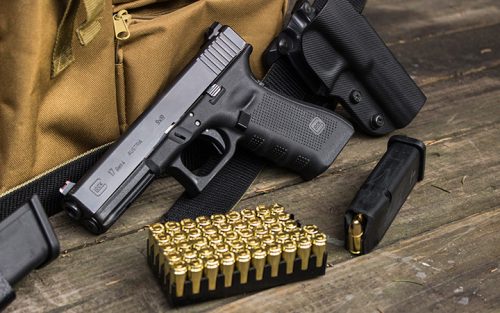
Glock 17
The Glock 17 is a semi-automatic pistol designed and manufactured by the Austrian company Glock Ges.m.b.H. It was developed in the early 1980s by Gaston Glock, an Austrian engineer, for the Austrian military’s handgun trials. The Glock 17 is one of the most popular and widely used handguns in the world, known for its reliability, simplicity, and innovative design.
Here are some key features and characteristics of the Glock 17:
- Chambering and Caliber:
- The Glock 17 is chambered for the 9x19mm Parabellum cartridge, a common and widely available ammunition.
- Construction:
- The frame and slide of the Glock 17 are typically made from polymer, making it lightweight and resistant to corrosion.
- Glock pistols are known for their “Safe Action” system, which consists of three automatic, independently operating mechanical safeties: a trigger safety, a firing pin safety, and a drop safety.
- Capacity:
- The standard magazine capacity for the Glock 17 is 17 rounds. However, extended magazines with higher capacities are also available.
- Barrel Length:
- The Glock 17 features a standard barrel length of about 4.48 inches (114 mm).
- Design and Innovation:
- Glock pistols are renowned for their innovative design, which includes a simple internal striker-fired action, eliminating the need for an external hammer.
- The absence of an external safety lever contributes to the simplicity of operation.
- Popularity and Adoption:
- The Glock 17 has gained widespread popularity among military, law enforcement, and civilian users. It is used by numerous military and police forces worldwide.
- Its popularity is attributed to its reliability, ease of use, and minimal maintenance requirements.
- Variants:
- Over the years, Glock has introduced various variants and generations of the Glock 17, incorporating improvements in ergonomics, features, and materials.
- Aftermarket Support:
- The Glock 17 has a robust aftermarket support, with a wide range of accessories, customization options, and replacement parts available.
Overall, the Glock 17 is considered a reliable and durable handgun suitable for various applications, including self-defense, law enforcement, and military use. Its design philosophy of simplicity and functionality has contributed to its success in the firearms market.
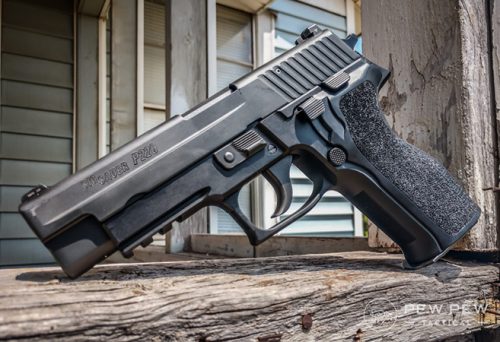
Sig Sauer
Sig Sauer is a renowned firearms manufacturer with a long history and a global reputation for producing high-quality handguns, rifles, and other firearms. The company was originally established in Switzerland in 1853 as Schweizerische Waggon Fabrik (Swiss Wagon Factory), and later moved to Germany. In 2000, the company officially became Sig Sauer, Inc. when it expanded its operations to the United States.
Here are some key aspects and characteristics of Sig Sauer firearms, with a focus on their handguns:
- P320 Series:
- One of Sig Sauer’s notable handgun lines is the P320 series, which is known for its modular design. The P320 was the first striker-fired pistol to feature a modular, removable trigger group, allowing users to easily change the frame size, caliber, and grip module.
- P226 and P229:
- The Sig Sauer P226 and P229 are popular semi-automatic pistols known for their accuracy and reliability. They are often used by military and law enforcement agencies worldwide.
- Sauer 38H and P210:
- In addition to modern designs, Sig Sauer has a historical lineage with classics like the Sauer 38H, a compact semi-automatic pistol, and the P210, a renowned precision pistol known for its accuracy.
- Legion Series:
- Sig Sauer offers the Legion series, a premium line of handguns with enhanced features and custom finishes. These models are geared towards enthusiasts and professionals who demand high-performance firearms.
- Innovation and Technology:
- Sig Sauer is known for incorporating cutting-edge technology into its firearms, including advanced materials, ergonomic designs, and innovative features to enhance performance and user experience.
- Military and Law Enforcement Adoption:
- Many Sig Sauer handguns are adopted by military and law enforcement agencies globally. The P320, for instance, won the U.S. Army’s Modular Handgun System (MHS) competition, becoming the new standard-issue sidearm.
- Diverse Caliber Options:
- Sig Sauer handguns are available in various calibers, providing users with options to suit their preferences and requirements.
- Global Presence:
- With manufacturing facilities in Europe and the United States, Sig Sauer has a strong global presence, serving civilian, law enforcement, and military markets.
Sig Sauer’s commitment to quality, innovation, and versatility has solidified its position as a leading firearms manufacturer, and their handguns are widely recognized for their performance and reliability in various professional and recreational settings.
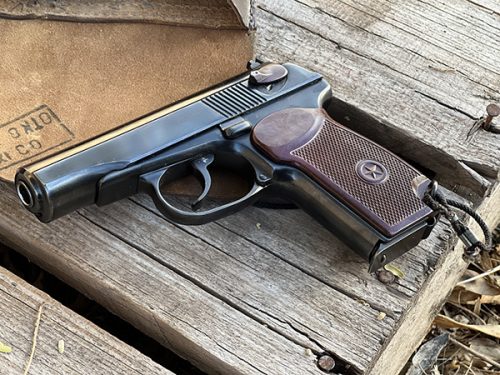
Makarov PM
The Makarov PM (Pistolet Makarova) is a semi-automatic pistol that originated in the Soviet Union and was widely used by various Eastern Bloc countries. Designed by Nikolay Makarov, the Makarov PM became the standard-issue sidearm for Soviet and Warsaw Pact military and law enforcement personnel. Here are some key features and details about the Makarov PM:
- Design and Development:
- The Makarov PM was developed in the late 1940s and early 1950s as a replacement for the aging Tokarev TT-33 pistol. It was adopted by the Soviet military in 1951.
- Caliber:
- The Makarov PM is chambered for the 9x18mm Makarov cartridge, a distinct cartridge that was specifically developed for this pistol.
- Construction:
- The Makarov PM features a simple and rugged blowback design. The frame and slide are typically made of steel, contributing to the pistol’s durability.
- Capacity:
- The standard magazine capacity is 8 rounds. It uses a single-stack magazine.
- Safety Features:
- The Makarov PM has a manual safety lever located on the left side of the frame, which also acts as a decocking lever. When engaged, it locks the slide and disconnects the trigger.
- Sights:
- The pistol typically has fixed iron sights, with a simple notch and post configuration.
- Military and Police Service:
- The Makarov PM served as the standard-issue sidearm for various military and police forces in the Soviet Union and its satellite states during the Cold War era.
- Simplicity and Reliability:
- The Makarov PM is known for its simplicity of design and high reliability. It can function effectively in harsh conditions, making it suitable for military use.
- Post-Soviet Era:
- With the dissolution of the Soviet Union, the Makarov PM became surplus and found its way into civilian markets. It remains popular among gun enthusiasts and collectors due to its historical significance and reliability.
- Variants:
- Various countries produced their own versions of the Makarov PM, often with slight modifications. The pistol was also manufactured in East Germany, Bulgaria, China, and other countries.
While the Makarov PM is no longer the standard-issue sidearm for military forces, it retains a place in history and is appreciated for its simplicity, reliability, and the role it played during the Cold War. It continues to be a collectible firearm and is used by enthusiasts worldwide.
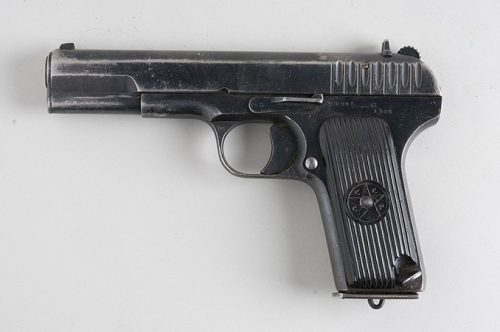
TT pistol
The TT pistol, officially known as the TT-33, is a semi-automatic pistol that was developed in the Soviet Union. The acronym “TT” stands for “Tula Tokarev,” named after its designer, Fedor Tokarev, and the city of Tula, where the original design was developed. The TT-33 became one of the iconic handguns of the Soviet military and was widely used by various countries during and after the Cold War. Here are some key features and details about the TT-33:
- Design and Development:
- The TT-33 was developed in the early 1930s as a replacement for the outdated Nagant M1895 revolver. It was officially adopted by the Soviet military in 1933.
- Caliber:
- The TT-33 is chambered for the 7.62x25mm Tokarev cartridge, a powerful and high-velocity round.
- Construction:
- The TT-33 features a simple and robust design, with a blowback-operated action. The frame and slide are typically made of steel.
- Capacity:
- The standard magazine capacity is 8 rounds. It uses a single-stack magazine.
- Sights:
- The pistol typically has fixed iron sights, with a notch and post configuration.
- Military Service:
- The TT-33 served as the standard-issue sidearm for the Soviet Red Army and other military forces during World War II and the Cold War era. It was widely used by countries in the Eastern Bloc.
- Simplicity and Reliability:
- Like many Soviet firearms, the TT-33 is known for its simplicity and reliability. It can function in various conditions and is easy to maintain.
- Post-Soviet Era:
- With the dissolution of the Soviet Union, surplus TT-33 pistols became available on the civilian market. They are often sought after by collectors and firearms enthusiasts due to their historical significance.
- Variants:
- Various countries produced their own versions of the TT-33, with some modifications to the design. Chinese and Yugoslavian variants, for example, are known to exist.
- Cultural Impact:
- The TT-33 has made appearances in numerous films, video games, and other media. Its distinctive appearance and historical context contribute to its cultural significance.
While the TT-33 is no longer in widespread military use, it remains a part of firearms history and is appreciated for its role during significant historical periods. Collectors and enthusiasts often value the TT-33 for its rugged design and connection to the Soviet military legacy.